Understanding Informed Consent in Medical Cases

I. Introduction

The Supreme Court’s decision in Elpidio Que v. Philippine Heart Center et al. crystallizes two pillars of medical malpractice jurisprudence in the Philippines: the precise contours of the “standard of care” and the exacting demands of informed consent. By denying the petition of the Que family and absolving Dr. Adventura of liability, the Court reaffirms that procedural rigor both in diagnosis and communication can insulate a practitioner from charges of negligence, even when a patient’s outcome is tragically adverse.

II. Factual and Procedural Synopsis

  • In mid-1999, Quintin Que was diagnosed with a coronary aneurysm. Dr. Adventura, then Head of Surgery at the Philippine Heart Center, performed a three-vessel coronary-artery bypass.
  • In October 1999, the physician proposed a cutting-edge stenting procedure, described to the family as “virtually risk-free.” The family provided written consent.
  • On February 14, 2000, under the hands of a visiting Belgian specialist, Mr. Que underwent stenting. He never regained consciousness and succumbed to a catheter-induced stroke on February 27, 2000.
  • The trial court and the Court of Appeals dismissed the Que family’s malpractice suit for failure to establish duty-breach causation. The family’s petition was filed with the Supreme Court.

III. Doctrinal Foundations

  1. Standard of Care
    Medical malpractice is, at its core, negligence. Under Cayao-Lasam v. Spouses Ramolete, the duty of care is measured against what “ordinarily trained medical professionals” would do under like circumstances. Absent proof of deviation from accepted medical practice, adverse outcomes even fatal ones do not, ipso facto, establish liability.
  2. Informed Consent
    Rooted in Schoendorff v. Society of New York Hospital and refined in Canterbury v. Spence, the doctrine mandates that physicians disclose all “material risks” those a reasonable patient would deem significant in clear, nontechnical language. Consent must be both knowing and voluntary; any material omission that, had it been disclosed, might have altered the patient’s decision will vitiate the practitioner’s defense against liability.

IV. Court’s Reasoning

  1. Duty and Breach
    The Court examined the consent record and corroborating affidavits. Dr. Adventura’s notes and the family’s signed consent form explicitly referred to the small but real risk of death. By documenting these discussions at the time of care, the physician satisfied the disclosure mandate and thus breached no duty.
  1. Causation
    The fatal stroke was traced not to negligent catheter manipulation but to an inherent biomechanical risk of any endovascular intervention. Expert testimony confirmed that the complication rate for such strokes though low falls within the known risk profile of stenting. Because the adverse event lay within the ambit of disclosed risks, causation of harm by negligence was deemed absent.

VI. Practical Implications

  1. Enhanced Consent Protocols
    • Use standardized checklists that itemize even rare and serious complications.
    • Use plain-language summaries and visual aids to reinforce verbal explanations.
  2. Robust Medical Records
    • Record not only what risks were disclosed but also the patient’s questions and responses.
    • Timestamp and initial each entry immediately after the discussion.
  3. Ongoing Professional Development
    • Train clinicians in communication skills, emphasizing empathy and clarity.
    • Conduct periodic audits of consent practices to identify gaps in patient understanding.

VII. Conclusion

Elpidio Que v. Philippine Heart Center delivers a clear message that is technical proficiency must be matched by meticulous communication. Ultimately, the ruling advances a dual objective: protecting patients without freezing the evolution of medical practice.

Sources: G.R. No. 268308 (Supreme Court)

Understanding Qualified Trafficking in Persons in the Philippines

Case Spotlight: People of the Philippines vs. XXX
Ponente: Associate Justice Paul Hernando | Date Decided: January 22, 2025

This week, we take a closer look at a significant ruling from the Supreme Court involving the protection of minors under our anti-trafficking laws.

The case involves two 14-year-old girls who were recruited by the accused to work as massage therapists in a spa, an establishment allegedly known for offering “extra services” to clients. According to the defense, the minors voluntarily sought employment, and the accused neither coerced them nor trained them to provide such extra services. Instead, she claimed to have simply provided standard massage training.

The Regional Trial Court found the accused guilty of Attempted Trafficking in Persons, noting that although the minors managed to escape before being fully exploited, the circumstances already pointed to a clear intent to traffic.

On appeal, the Court of Appeals modified the conviction to Qualified Trafficking in Persons, recognizing the involvement of minors and the gravity of the offense. The penalty was increased to life imprisonment, along with monetary damages amounting to millions of pesos.

Still insisting on her innocence, the accused elevated the case to the Supreme Court, arguing that she had no malicious intent and that her actions were merely meant to help the minors find work.

But the High Court was unequivocal.

In rejecting the appeal, the Court emphasized that the consent of a minor is never a valid defense under Republic Act No. 9208, as amended by RA No. 10364. It stated:

“A minor victim’s knowledge or consent is rendered meaningless due to the coercive, abusive, or deceptive means typically used by perpetrators of human trafficking. Even absent these means, a minor’s consent is not considered freely given.”

The Supreme Court affirmed that the accused was guilty of Qualified Trafficking in Persons, reiterating key legal principles:

  1. When the victim is a child, trafficking is qualified, which carries harsher penalties.
  1. Actual exploitation does not need to occur, recruiting minors for the purpose of sexual exploitation is already a consummated crime.
  2. Trafficking can be committed even without force or deception if it takes advantage of a child’s vulnerability.

Quoting the Court:

“Recruitment, transportation, transfer, harboring, adoption or receipt of a child for the purpose of exploitation shall be considered trafficking in persons even without any of the means stated under the law.”

“Republic Act No. 9208 does not require the victims to be actually subjected to prostitution or sexual exploitation for the crime to be complete. The act of recruitment with intent to exploit is enough.”

This decision reinforces the strong protective stance of the law when it comes to minors and serves as a reminder that the crime of trafficking begins not at the moment of abuse, but at the moment of intent and recruitment.

📚 Read the full decision here:
🔗 People of the Philippines vs. XXX (G.R. No. 273990)

Navigating the Legal Challenge in Funding for Philippine Nurses

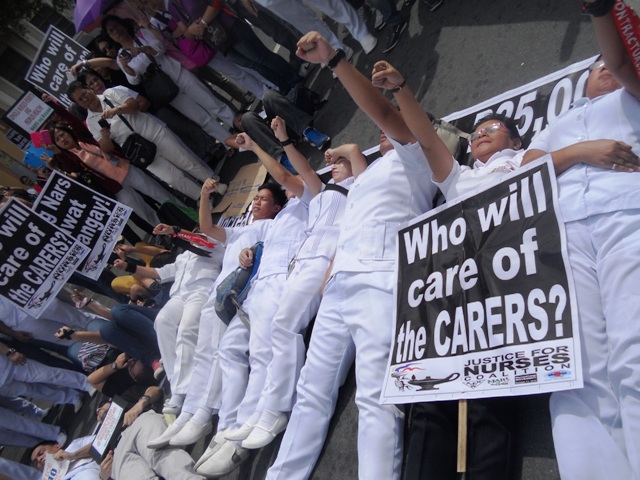
In 2019, the Supreme Court delivered a significant ruling in Ang Nars Partylist vs. Executive Secretary, stating that “the Court cannot compel Congress to fund Section 32 of R.A. No. 9173 as the power to appropriate public funds is lodged solely in Congress. Unless Congress makes the necessary appropriation through a law, Section 32 of R.A. No. 9173 will remain an unfunded law, a situation that applies to many other laws.” This ruling underscores a crucial legal limitation: despite the existence of a law designed to enhance the compensation of Philippine nurses, this law cannot compel the government or private hospitals to increase nurses’ salaries without the necessary legislative appropriation.

At present, the monthly salary for an entry-level nurse in the Philippines hovers around 36,000 to 37,000 pesos. In stark contrast, nurses working abroad can earn between 150,000 and 500,000 pesos per month, depending on the country and the employing institution. While it might be tempting to view financial compensation as the sole factor in these decisions, many nurses opt to work internationally not just for higher salaries but also for enhanced professional growth and better overall quality of work and life.

Given that nurses are unable to leverage existing laws to compel Congress to allocate additional funds, where does this leave them? The recent passage of the Universal Health Care Act, while well-intentioned, fails to address the crucial role of nurses in ensuring accessible and comprehensive healthcare for all Filipinos. The Act’s admirable goals could risk joining the ranks of other unfunded and unmet legislation if the necessary financial resources are not allocated. As the saying goes, our country may have excellent laws, but we often falter in their implementation.

Addressing this issue requires treating nurses as a distinct class or sui generis of health workers, particularly given the current state of our healthcare system. The prevailing conditions demand that we afford nurses the consideration they deserve. While we may not be able to match the compensation offered by other countries, the government should at least develop a strategic plan to elevate the standards of the nursing profession. If Congress can legislate mandates for Local Government Units to allocate budget percentages for non-health-related activities like gender and development, DRRM, child protection, expanded programs for senior citizens, among others, it should similarly legislate for the better financial support of nurses. This does not need to be achieved within a single year; a phased approach to improving the financing of our frontline healthcare workers could result in substantial benefits.

We cannot expect nurses to fully support the goals of universal health care without addressing their own needs. Extending greater compassion to this vital profession is not merely a gesture of goodwill but a necessary step, as nurses are often the last individuals to provide care in our final moments.

Ethics on the Edge: Nurses Exploiting Patients for Social Media Content

During the Crimean War, Florence Nightingale did not exploit the wounded for personal gain or publicity. Although social media did not exist at the time, she had the option to use the press but chose not to. Instead, Nightingale used the lamp to symbolize her commitment to the nursing profession, rather than resorting to modern tools like selfies or cameras. Her focus was not on self-interest or public attention but on providing compassionate care to the sick and injured. Florence Nightingale became the Mother of Nursing because of her selfless acts.

She was passionate about her Environmental Theory not about her public image.

Fast forward to today, many, though not all, nursing students are using their patients as digital content on social media. Recently, I was shocked to learn that a nursing student recorded the dying moments of a patient—specifically, “the precise time when the electrocardiogram reading flatlined”—and then uploaded this video footage to a public social media account. The post went viral and garnered widespread attention from people in the healthcare profession.

Florence Nightingale must be turning in her grave.

The nursing profession is not a normal occupation. It is imbued with public interest, and it has cultural, professional, and moral underpinnings. In fact, the Board of Nursing passed Board Resolution No. 220, Series of 2004 or the Promulgation of the Code of Ethics for Registered Nurses to enforce a body of ethical standards or norms for Filipino Nurses.

Section 1 of the Code of Ethics provides that — The Filipino registered nurse, believing in the worth and dignity of each human being recognizes the primary responsibility to preserve health at all costs. It is expanded by Section 8 of the same Code of Ethics, in this wise: Nurses must Respect Patients’ Bill of Rights in the delivery of nursing care. One of the patient’s bill of rights is the right to privacy and respect.

Registered nurses are aware that their actions have professional, ethical, moral, and legal dimensions. They strive to perform their work in the best interest of all concerned and to carry out their duties under existing laws, rules, regulations, and generally accepted principles of moral conduct and proper decorum.

During my first week of nursing study at West Visayas State University, it was impressed upon us that the focus of nursing care is always the patient. Theoretical foundations of nursing practice, particularly those advocated by Dr. Jean Watson, emphasize that nursing should consider the whole person.

A dying person remains a person, and a nursing student should use his or her time to either prevent death or assist the patient in achieving a comfortable and peaceful end. I cannot understand how posting on social media could be a priority during such a critical moment.

This issue presents a critical challenge for the Board of Nursing to update its Code of Ethics to address the conduct of nurses in the online realm. Professional organizations must adapt to contemporary realities that jeopardize the sacred trust placed in the nursing profession. Filipino nurses are renowned for their compassion and competence, which is why the Philippines remains a leading exporter of nursing talent globally. We cannot allow narcissistic tendencies to tarnish this esteemed profession.

It is imperative that we collectively work to uphold and elevate the standards of nursing, ensuring that our actions reflect the true spirit of care and professionalism.

Finally, our nursing schools should prioritize not only developing the skills of nursing students but also shaping their attitudes.

About the Author:

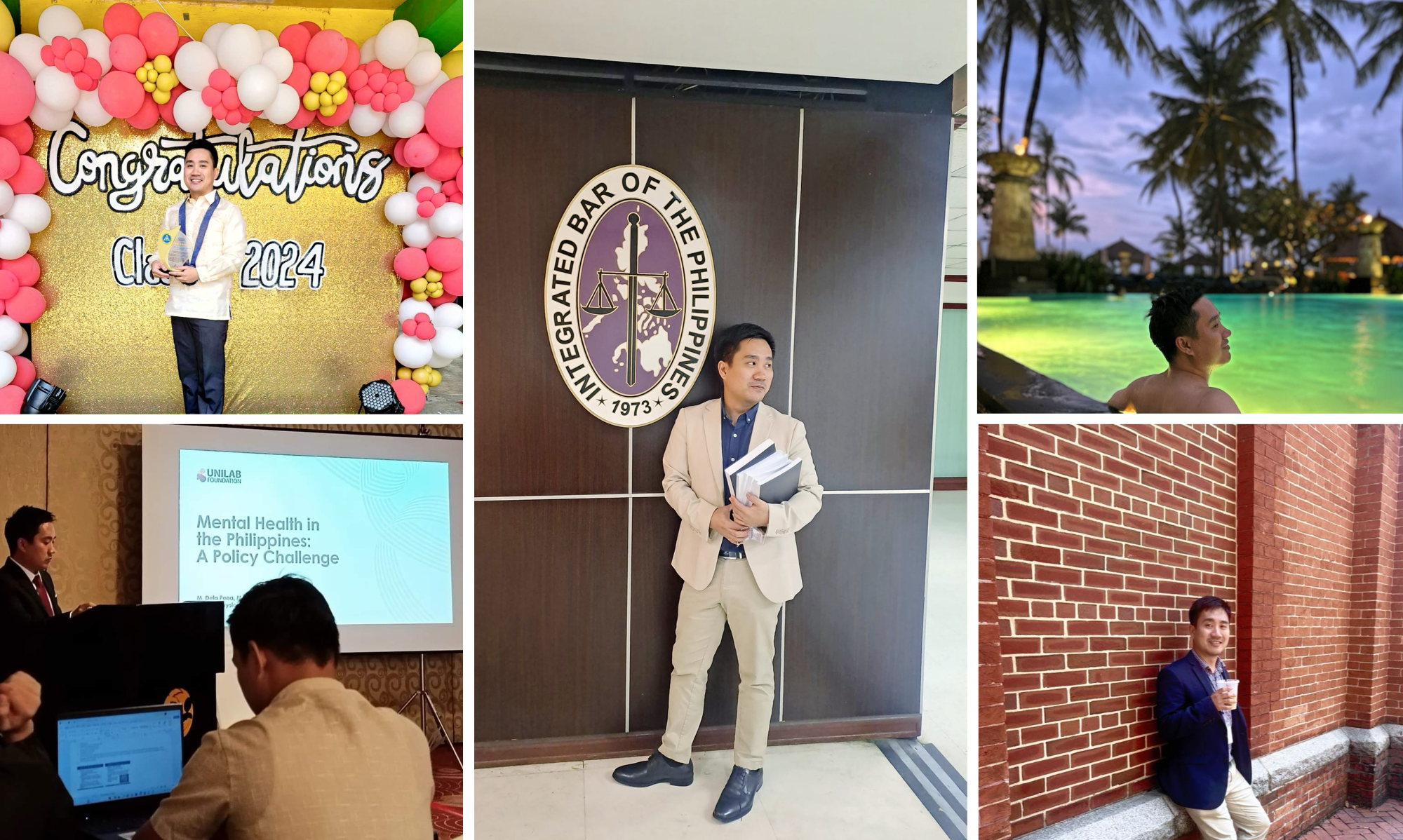
Michael “Mikee” De la Peña is both a lawyer and a nurse, currently serving as a policy officer at a health think tank in the Philippines.

In his legal practice, he manages cases related to civil and criminal litigation, non-profit law, health policy, and intellectual property rights. He is also pursuing a Master of Laws degree at Ateneo de Manila University, focusing on Intellectual Property Law and Health Governance.

We are nurses, we are not less.

Just in case the news skipped your notice Mr. President, thousands of our skilled Filipino nurses are now leaving the country not because they want to touch the snow in London, not because they want to visit Santorini in Greece, not because they want to date a handsome and hunky Caucasian or a rich Arab woman, but because our system forced them to do so.  Our callous disregard to their rights made them to believe that they are second-class healthcare workers. Verily, our nurses suffer the lowest possible indecency a country can inflict to its professional workers. And they have valid license from the Professional Regulation Commission. They are required to have an accumulated CPD units, but when our nurses require the same good treatment from this government, what do they get? — Nothing!

Again, I’m sorry to speak about this, but I can’t sleep seeing my fellow nurses suffer. I am not working in a hospital but my heart is still beating for my profession. My heart is still beating for the Nightingale in white, in blue and in scrubs. Allow me to speak for them.

I don’t blame you Mr. President that you are currently focusing on “War on Drugs”, but as a form of request, can we give equal attention to those who fight alongside with you inside the hospitals, the fences of communities, penal institutions and healthcare centers?

How can we possibly heal the country if our healers are wounded themselves?

How can we miraculously rehabilitate this archipelago if our nurses are now starting to fly abroad?

Currently, I’m envious about the attention you give to “Jeepney Modernization”. In my mind, “lucky are the jeepneys, for they will be modernized soon”, but pain are for our poor nurses who will still be living and working in areas where modernization is not part of the plan.

Make no mistake Mr. President, our nurses are still living with healthcare technology which placed themselves in the brick of danger.  These are competent and intelligent Filipinos who passed the board exams.  In fact, we cannot even provide them with  adequate soap and alcohol for their hand sanitation, N92 masks for personal protection, and heavens sake, we don’t pay them with dignity.

Before it’s too late Mr. President, I would like to invite your attention to this maladies enveloping our Filipino nurses. They deserve to experience the “change” that you promised during the election season. Or should I treat this as another form of fake news?

#Mutya


He is the best of Philippine Airlines.

Since Philippine Airlines has launched its new philosophy of being the “Heart of the Filipino”, I never had the chance to completely comprehend it. For me, a “Filipino heart” is formed by distinct strands of compassion, hospitality and love. Honestly, I never felt the perfect experience not until my last three flights last week. A flight attendant perfectly embodies the real meaning of “Heart of the Filipino”.

His name is Vincent as stated on his nameplate. I had the chance to witness his unbelievable power three times in a row. In one of my trip, I was very angry because the flight was delayed for almost one and a half hour. I want to shout out loud that could reach the control tower of NAIA from Cotabato but when I entered the plane, it was different.

Vincent stands at the door–confident.  He gave his unique Filipino smile to each guest. That same powerful smile appeased the agitated passengers. I returned the warm gesture, he smiled back and he assisted me to my section. The moment after I fastened my seat-belt, he smiled again.

He won. I was pacified. Everyone from rows 1-15 experienced serenity inside the plane. At that moment, I understood that the heart of the Filipino is reflected in every genuine smile. He nailed it. Vincent perfected the art of smiling. His smile could stop time, could make you feel that you are a Million Miler,  could make you experience that you are the Queen of the Universe.

I want to say to the captain, “Hey Captain, let’s depart tomorrow.”

He also possesses the essential element of sensitivity. He could easily ascertain if someone is suffering from discomfort. He assesses the situation and he renders the appropriate intervention. Afterwards, he returns to evaluate. He will never leave you even you are sitting along the Economy Class. His attention never changes from the head up to the tail of the plane. He is compassionate, his technique undoubtedly comes from a deeper origin—his heart.

When snacks are being distributed and you happened to be sleeping, don’t worry because he will respect you. He will not disturb you, instead he will look at you as if you are Snow White.  He won’t ask you coffee, tea or water. He will not force you to wake up and receive the Banana Bread Slice. He will open the tray and will place your food for you to enjoy once you are awake. Then he will return with a smile and asks you for your choice of drinks. He will never leave you hungry, thirsty or sleepy.

His comforting words will kiss and caress you.

Just like with other flights, the time for deplaning will come—sad. The relationship ends after a passenger leaves the plane. But Vincent is not one of those who easily terminate the relationship. He ends the experience with a smile composed of 99% happiness and wishes of safety and inspiration. He hides the remaining 1% for you to feel that you need to return to discover and to experience over and over and over again. He knows how to connect.

With all of these, I can say that Vincent has the heart of a Filipino, a perfect personification of Philippine Airlines Philosophy and Values of highest costumer service. He made me so proud because he had shown the best of the Philippines and the distinct brand of service marked by heartfelt warmth and hospitality. He is one of a kind, a total mixture of passion, dedication and service. Philippine Airlines must be proud of him.

#Mutya

The “Reid effect” at its best.

Be fearless in the pursuit of what sets your soul on fire.

I became a fan since 2010 when he first appeared in PBB Teen Clash.  I am not fond of chasing celebrities except when it is James Reid.

He is one-of-a-kind, an irreplaceable atom,  who has a unique identical quantum mechanical state. He has this form of energy that can brew inspiration into meaningful actions. The bottom line is, he can place you into motion.

I call this as the “James Reid effect.

For almost 6 years, I communicated with him through my quantum universe (an alternate universe that only I can comprehend and experience).

This universe is safer compared to the universe we were born to live; there, I can manipulate things and thoughts freely without entailing cost and judgement of anyone. There, I got to see persons such as James who helped shape my judgement and my demeanor when the time calls for it.

Giving you concrete examples:

When deadlines are approaching and when anxiety is escalating, I would result to searching for his picture from any source available and pin it on my desk, at the end of the day, I am always amazed on how these little, funny things and activities gave me the energy to “do good for myself and for others.”

In times of heated arguments and troubles, my relaxants are his songs.

When I am about to sleep, my last activity is always to watch his videos.

During difficult times, his sweet, distant smile is one of my motivations.

Yesterday, I got the chance to meet him and the encounter crystalized my positive evaluations of him.

No  existing word in our lifetime (even in the combined dictionary of Webster and Merriam) can describe that moment. Some symptoms include blurring of vision and chest tightness, others are already uncanny, you have to experience it yourself.

My favorite concept in chemistry is the “Pauli exclusion Principle” by Austrian physicist Wolfgang Pauli in 1925, he states that no two particle cannot occupy the same space. I see this applicable because no matter what, James will always occupy that quantum space in me, whatever the circumstances and the conditions will be.

Experience the “James Effect” today.

-Mutya


Sen.Villar files bill prohibiting public funds use for feeding program less than 120 days

Senate Bill 1114 or otherwise known as an act providing for a comprehensive malnutrition program and appropriating funds thereof was filed by Senator Cynthia Villar.

The bill seeks for the creation of a more comprehensive program that will address the malnutrition status of the country.

The unique bill also will transfer the function of the National Nutrition Council under the Office of the President. The same bill encourages partnerships with the NGO’s, training and capacity building in the barangay and also the acknowledgement of the role and contribution of women in policy making.

Moreover, the proposed measure also empowers the National Nutrition Council to design policies to address the malnutrition problems in the country.

At the core of the bill also is the creation of nutritional interventions for children and teenage and lactating mothers during disasters.

-Mutya

Photocredit: www.ilovepagadian.com

LRT/MRT slapdash security worrisome

Despite President Duterte’s declaration of “State of Lawlessness” after the bombing of the night market in Davao that killed 14 and injured over 60 individuals, still the security at LRT and MRT stations are seemingly in a relaxed mode.

Earlier, when I took an LRT ride in Boni station going to Shaw, I expected a more stringent security check knowing that Metro Manila is already in a heightened alert following attacks and bombing threats. More so, tons of information in social media were already circulating warning the public to be vigilant for possible suicide bombing attacks in public and overcrowded places.

The train station which is the major transport system in Metro Manila is an excellent target should terrorist decide to cause high number of casualties.

If we are going to learn from past train station attacks for example the 2010 Moscow Metro bombings were suicide bombings carried out by two women during the morning rush hour of March 29, 2010 where at least 40 people were killed, and over 100 injured. (Wikipedia)

Also, the 2004 Madrid train bombings on the morning of 11 March 2004 – three days before Spain’s general elections. The explosions killed 192 people and injured around 2,000. (Wikipedia)

These attacks should become the working precedent of our security measures, now that we are battling faceless enemies who want to spread misery and havoc in the country. A bombing in any of our train station in the country will surely paralyze most of the business districts not to mention the number of possible casualties.

The LRT and MRT management now should increase their security capabilities, plan and design emergency response protocols in times of emergency especially bombing. I hope that the transportation department now take the preventive stance rather than the old and usual post facto interventions.

Let’s elevate our measures by being more intelligent than our enemies. It is through with adequate preparation that we would be able to protect the general welfare and safety of the public.

Don’t wait for an attack to occur before acting on the threat. Now that change has come, it’s time also to change our approach. We cannot afford seeing a burning train, during rush hour with roads blocked by traffic and dead, charred, dismembered bodies on the street.

#Mutya

Photo credit: http://blog.vroomvroomvroom.com/

Walang masungit na nurse kung walang CORRUPT.

During the budget hearing of the Department of Health an unsolicited and off scurrilous remark was raised placing into contempt the hardworking healthcare professionals, specifically nurses in public hospitals. The statement has no basis, tainting the caring image of the nurses.

The spirit of nursing is caring. It is in the nature of every nurse to be understanding and to be patient to everyone who is committed to her/his care. In fact, it is enshrined in the nursing curriculum to inculcate the science and art of caring in every nursing student. You can’t graduate and pass the nursing board exam without these prerequisites.

Like other professionals, nurses are also human being. Nurses are not saints or demi-gods. Their natural sparks and healing hands have limitations and expiration especially if abused. A hungry and ill-paid nurse have all the right to become grumpy, it is within the ambit of rational behavior of a human being.

Being peevish  if you are abused is normal and acceptable compared to being corrupt– siphoning the money of the country for his or her own self-interest aside from doing nothing but sitting in a chair waiting for the next election to happen– a satanic act, worthy of lethal injection.

The statement overgeneralizing nurses is but an uncanny statement, an attempt to weaken the movement of nurses towards equitable and more humane working condition in the country.

With due all respect, without implication of malice, I believe that there are more corrupt politicians compared to impatient nurses. If we are going to study the scenario, nurses sometimes become irritated because of the ineffectiveness of the government to fix the healthcare system. The lean and beggarly annual allocated budget of the government and the corruption inter alia, are the main reasons why the healthcare delivery is most of the time not ideal. Expecting for 100% of the nurses smiling all the time is stupidity.

The proposed signages in hospitals are not necessary because nurses understand the precepts of their profession. It will only entail additional costs for the health department. It would be wiser if the budget for these signages be utilized in improving the welfare of these poor nurses; a simple water dispenser or a 1 peso increase in their salary will be greatly appreciated.

If not, nurses also should place some tarpaulins in the front of every public hospitals saying:

“Walang masungit kung walang corrupt.”

“Hustisya para sa mga nurse.”

How about that?

I think it would be fair.

-Mutya

Photocredit: http://bulatlat.com/