During the Crimean War, Florence Nightingale did not exploit the wounded for personal gain or publicity. Although social media did not exist at the time, she had the option to use the press but chose not to. Instead, Nightingale used the lamp to symbolize her commitment to the nursing profession, rather than resorting to modern tools like selfies or cameras. Her focus was not on self-interest or public attention but on providing compassionate care to the sick and injured. Florence Nightingale became the Mother of Nursing because of her selfless acts.
She was passionate about her Environmental Theory not about her public image.
Fast forward to today, many, though not all, nursing students are using their patients as digital content on social media. Recently, I was shocked to learn that a nursing student recorded the dying moments of a patient—specifically, “the precise time when the electrocardiogram reading flatlined”—and then uploaded this video footage to a public social media account. The post went viral and garnered widespread attention from people in the healthcare profession.
Florence Nightingale must be turning in her grave.
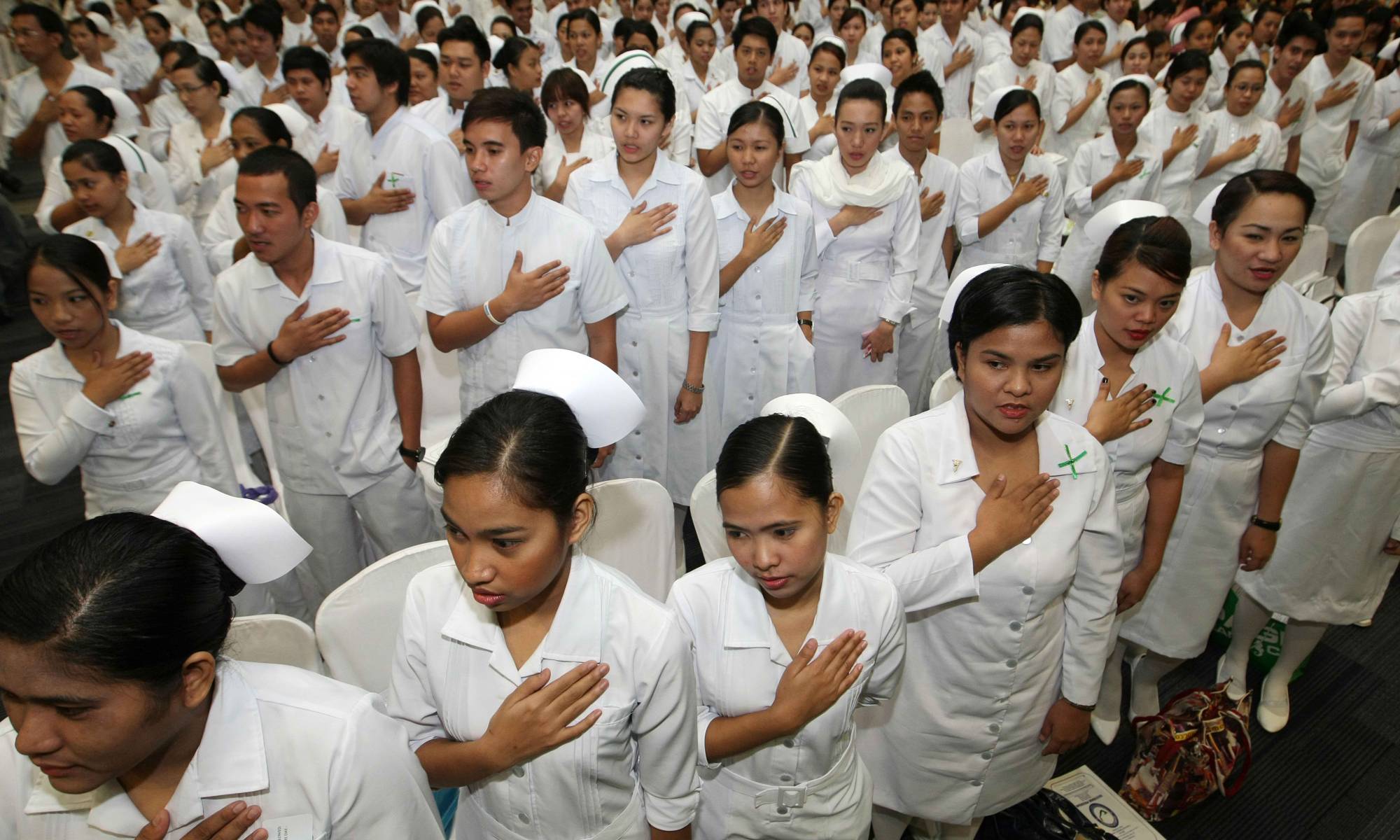
The nursing profession is not a normal occupation. It is imbued with public interest, and it has cultural, professional, and moral underpinnings. In fact, the Board of Nursing passed Board Resolution No. 220, Series of 2004 or the Promulgation of the Code of Ethics for Registered Nurses to enforce a body of ethical standards or norms for Filipino Nurses.
Section 1 of the Code of Ethics provides that — The Filipino registered nurse, believing in the worth and dignity of each human being recognizes the primary responsibility to preserve health at all costs. It is expanded by Section 8 of the same Code of Ethics, in this wise: Nurses must Respect Patients’ Bill of Rights in the delivery of nursing care. One of the patient’s bill of rights is the right to privacy and respect.
Registered nurses are aware that their actions have professional, ethical, moral, and legal dimensions. They strive to perform their work in the best interest of all concerned and to carry out their duties under existing laws, rules, regulations, and generally accepted principles of moral conduct and proper decorum.
During my first week of nursing study at West Visayas State University, it was impressed upon us that the focus of nursing care is always the patient. Theoretical foundations of nursing practice, particularly those advocated by Dr. Jean Watson, emphasize that nursing should consider the whole person.
A dying person remains a person, and a nursing student should use his or her time to either prevent death or assist the patient in achieving a comfortable and peaceful end. I cannot understand how posting on social media could be a priority during such a critical moment.
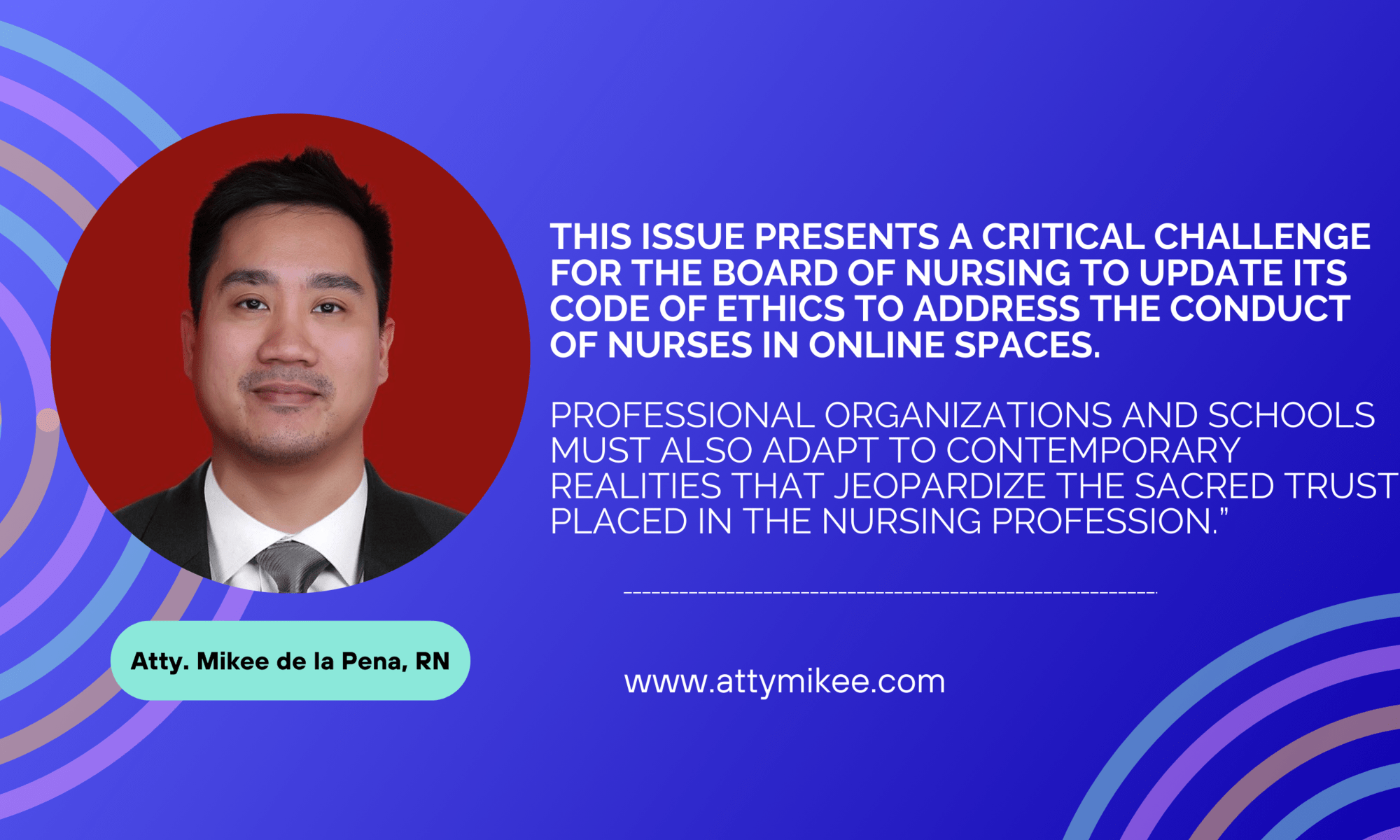
This issue presents a critical challenge for the Board of Nursing to update its Code of Ethics to address the conduct of nurses in the online realm. Professional organizations must adapt to contemporary realities that jeopardize the sacred trust placed in the nursing profession. Filipino nurses are renowned for their compassion and competence, which is why the Philippines remains a leading exporter of nursing talent globally. We cannot allow narcissistic tendencies to tarnish this esteemed profession.
It is imperative that we collectively work to uphold and elevate the standards of nursing, ensuring that our actions reflect the true spirit of care and professionalism.
Finally, our nursing schools should prioritize not only developing the skills of nursing students but also shaping their attitudes.
About the Author:
Michael “Mikee” De la Peña is both a lawyer and a nurse, currently serving as a policy officer at a health think tank in the Philippines.
In his legal practice, he manages cases related to civil and criminal litigation, non-profit law, health policy, and intellectual property rights. He is also pursuing a Master of Laws degree at Ateneo de Manila University, focusing on Intellectual Property Law and Health Governance.


 ask atty mikee